
What's It Like Moving from the Bay Area to Bend, Oregon?
Leaving the Bay Area for Bend, Oregon? Kelly Johnson, who lived in the Bay Area herself before coming home to Oregon, breaks down the honest differences in cost, pace, and what your budget actually buys here.
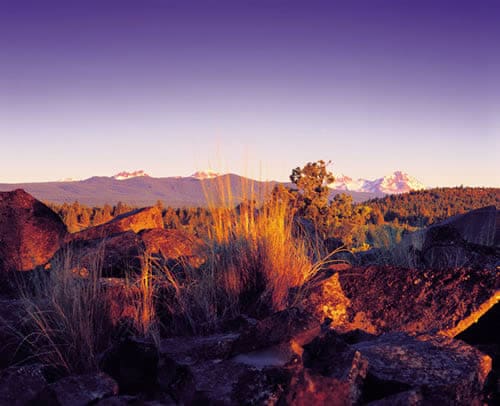
The first thing I noticed when I left the Bay Area was how much quieter my own head got. Not the traffic noise, though that went too, but the constant low hum of always being somewhere ten minutes behind schedule. I lived in the Bay Area myself before I came home to Oregon, so when a client tells me they are leaving Mountain View or Walnut Creek or the Peninsula for Bend, I am not guessing at what that adjustment feels like. I am a real estate agent in Bend, Oregon helping relocation buyers moving to Bend and local move-up sellers and buyers, and Bay Area transplants are one of the largest groups I work with. Here is the honest version of what changes.
Why Bay Area Residents End Up in Bend
The most common reason I hear is simple: the money stopped making sense. Bay Area housing costs are among the highest in the country, and a lot of my clients reach a point where they do the math on what they are paying for a starter home in Redwood City or San Jose and what that same amount buys in Central Oregon, and the gap changes the conversation immediately. This is not about being priced out entirely. Most of my Bay Area clients are doing fine financially. It is that they start asking what all that money is actually buying them day to day, and the answer starts to feel thin.
The second reason is pace. The Bay Area runs on a kind of low-grade urgency, long commutes, packed calendars, traffic that eats into evenings and weekends. Bend is small enough that most of daily life, school runs, groceries, appointments, happens without ever really touching a freeway. People do not realize how much mental space that frees up until they have lived it for a few months.
The third reason is the outdoors, though this one surprises people. The Bay Area has real access to nature, the coast, Tahoe, the East Bay hills. But for most people it is a planned trip, something you drive to on a Saturday. In Bend, Mt. Bachelor, the Deschutes River, and hundreds of miles of trail sit close enough to town that people build weeknights around them, not just weekend plans. That difference between “nature is nearby” and “nature is part of my Tuesday” is a big part of what draws Bay Area transplants here.
What Bay Area Transplants Are Sometimes Surprised By
Here is the part I would rather tell you now than let you find out after you have already moved. Bend is not a smaller, cheaper version of the Bay Area. It is a genuinely different place, and some of what you are used to simply is not here.
The tech job market is the biggest one. Bend has a growing remote work culture and a real small business and healthcare economy, along with tourism and outdoor recreation, but it does not have anything close to the concentration of tech employers the Bay Area has. If your job is not remote, or you are hoping to find an equivalent role locally, that is worth researching honestly before you commit. Most of my Bay Area clients who make this move are already remote, already have a job that travels with them, or are retiring or stepping back from full-time work.
Winter is the other adjustment, and it is a real one. Bend sits at roughly 3,600 feet elevation and gets genuine, consistent snow most years. That is nothing like Bay Area winters, which mean rain and maybe a rare dusting in the hills. If you have not owned snow tires or shoveled a driveway in years, or ever, that is a real shift in how you plan your winter. Bend also gets a lot of clear, sunny winter days, more than people expect, but the days it snows, it means it.
The restaurant, arts, and shopping scene here is smaller too. Bend punches above its weight for a city this size, with a genuinely strong food and brewery scene, but it is not a scaled-down San Francisco or Oakland. There is no quick trip to a bigger city nearby when you want that fix. That is a real tradeoff, not something to gloss over.
Wildfire smoke is worth naming honestly as well. Late summer in Central Oregon can bring smoky stretches, similar to what parts of the Bay Area and Northern California have dealt with in recent fire seasons. I would rather tell every relocation client this up front than let them discover it the hard way in August.
And growth here is real. Bend has grown quickly over the past decade or more, and some longtime residents feel that in traffic, housing costs, and pressure on the trail systems that drew people here in the first place. I do not think about relocation as convincing people to move here. I think about it as helping people who are already on their way land thoughtfully and become good neighbors once they arrive.
The Financial Picture
This is where the numbers usually work in a Bay Area transplant’s favor, though I would still recommend running your specific numbers with a tax professional rather than assuming. California has both a state income tax and a state sales tax. Oregon has a state income tax too, but no sales tax at all, which most transplants notice quickly once they start shopping and paying bills here.
Housing is where the bigger shift happens. I do not have current Bay Area market data to hand you a direct price comparison, and I would rather be straightforward about that than guess at numbers I cannot confirm. What I can tell you clearly, because it is Bend market data I track every day, is what your budget actually buys once you get here. For most of my Bay Area clients, it buys considerably more house and more land than what they are used to.
What Your Budget Actually Buys in Bend
This is the part I am most direct about with every relocation client, no matter which city they are leaving.
In the $600K to $750K range, you are generally shopping NE Bend, including Boyd Acres, Mountain View, and the Orchard District, or SE Bend, including Larkspur, Old Farm District, and Stone Creek. That range typically buys a newer or well-maintained single-family home with a real yard, without major compromises on move-in condition. My listing at 20767 NE Angora Ct is a real example of what this price tier looks like in practice. I listed it at $699,900, it drew 5 offers in 5 days, and it closed at $750,000 in 30 days. Homes priced right in this band do not sit long.
Move into the $750K to $900K range and the picture depends on which side of town you are looking at. In SW Bend, near Old Mill District, Broken Top, or Tetherow, that budget starts to open up mountain views. In NW Bend, including NorthWest Crossing, Discovery West, Awbrey Butte, and West Hills, that same budget more often gets you an older home that needs some work rather than a view, since true mountain view homes in NW Bend generally start north of $1M.
If a mountain view in NW Bend is the priority, I would rather set that expectation with you now than let you fall in love with a neighborhood before you know the real number.
Neighborhoods Bay Area Buyers Tend to Gravitate Toward
Bay Area buyers used to a walkable, coffee-shop-and-farmers-market feel from places like Menlo Park, Palo Alto, or downtown Walnut Creek often gravitate toward NorthWest Crossing or Discovery West in NW Bend, where restaurants, shops, and a farmers market sit within a short walk of home.
Buyers who want a more resort-style, polished community with golf and amenities often look toward SW Bend, at Broken Top or Tetherow. Buyers who want a lower price of entry with that same walkable, urban-adjacent feel sometimes land in the Old Mill District, which is dominated by condos and townhomes.
Buyers coming from a Bay Area suburb who want more space, a real yard, and a garage without giving up an easy commute tend to feel right at home in NE or SE Bend, where the price per square foot goes noticeably further.
None of these is automatically the right answer. It comes down to what your actual daily life looks like and what you want it to feel like here, which is exactly what I dig into before I ever show you a house.
A Couple of Real Scenarios
Say you are a remote-working couple from the Peninsula, tired of watching your mortgage payment climb while your square footage stays flat, ready to trade it for more house, more land, and direct trail access. NW Bend, specifically NorthWest Crossing or Discovery West, is usually where I start that conversation, with an honest heads up that a mountain view at your price point may mean an older home rather than new construction.
Or say you are a family in the East Bay, priced out of moving up locally, wanting more space, a yard, and a garage without giving up a solid school option. NE or SE Bend in the $600K to $750K range is usually the better fit, and depending on your Bay Area equity, that move can free up more of your budget than people expect once they see what the same money buys here.
Common Mistakes Bay Area Buyers Make
Assuming Bend has an equivalent tech job market. It does not, at least not at Bay Area scale. If your role is not remote, research the local job market honestly before assuming your career transfers directly.
Underestimating winter. Bay Area winters mean rain. Bend winters mean real, consistent snow at elevation. I go into more depth on this in What to Know About Bend, Oregon Winters Before You Move Here.
Assuming Oregon is automatically cheaper across the board. Housing usually is. Taxes depend on your specific income and spending, so run your own numbers rather than assuming the swap is a clear win.
Treating Bend’s quadrants as interchangeable. NW Bend, SW Bend, NE Bend, and SE Bend price and feel very differently from each other. What your budget buys changes a lot depending on which one you are looking at.
Expecting the same restaurant and culture scene. Bend is strong for its size, but it is not a smaller Bay Area, and there is no quick day trip to a bigger city when you want that fix.
Waiting too long to get pre-approved. Inventory in the popular price ranges moves fast, and buyers who are ready to make an offer the day they find the right home have a real advantage over buyers who are still sorting out financing.
How I Help Bay Area Buyers Land Well
I am Oregon born and raised, though I have also lived in Southern California, Colorado, and the Bay Area myself, so I understand exactly what it feels like to leave that pace and cost structure behind and land somewhere completely different. I have been a licensed Oregon real estate broker since 2007, and I have helped relocation buyers land in Bend from more than ten different metro areas. For Bay Area buyers specifically, I start with a discovery call about what your daily life actually looks like now and what you want it to look like here, then build a personalized property portal so you are not sorting through listings that do not fit. When you are ready to tour, I keep it intentional, generally five to eight homes with a printed packet for each one, rather than a scattered day of showings. My job is to help people who are already on their way to Bend land thoughtfully and become good neighbors once they get here. If you want the fuller picture before you go, I also cover it in Moving to Bend, Oregon in 2026: What You Need to Know Before You Go and Cost of Living in Bend, Oregon: An Honest 2026 Breakdown.
Frequently Asked Questions
Is Bend a good fit for someone moving from the Bay Area? It depends on what you value. If you are ready to trade Bay Area cost and pace for more space, a slower daily rhythm, and closer everyday access to mountains, rivers, and trails, and you can make peace with a smaller job market and a smaller restaurant and culture scene, Bend tends to be a strong fit.
Is it cheaper to live in Bend than the Bay Area? Housing is almost always dramatically less expensive here. On taxes, California has both income tax and sales tax, while Oregon has income tax but no sales tax, so I would recommend running your specific numbers with a tax professional rather than assuming one state wins outright.
How far is Bend from the Bay Area? It is roughly an 8 to 9 hour drive depending on your route and Sierra pass conditions, or about a 1.5 to 2 hour flight to Redmond Municipal Airport, often with a connection through San Francisco, Oakland, or San Jose.
What does $700K actually buy in Bend, Oregon? In the $600K to $750K range, you are typically shopping NE or SE Bend, which usually gets you a newer or well-maintained single-family home with a real yard. My listing at 20767 NE Angora Ct, listed at $699,900 and closed at $750,000 after 5 offers in 5 days, is a real example of what that range looks like in practice.
Does Bend actually get real winter, unlike the Bay Area? Yes. Bend sits at roughly 3,600 feet elevation and gets consistent snow most years, a real change from Bay Area rain. You also get a lot of clear, sunny winter days here, but when it snows, it means it.
Is there a tech job market in Bend? There is a growing remote work and small business scene, along with healthcare, tourism, and outdoor recreation, but nothing close to Bay Area scale. Most of my Bay Area clients who move here are already remote workers or are stepping back from full-time work.
Let’s Talk About Your Move
If you are already thinking seriously about leaving the Bay Area for Bend, let’s have an honest conversation about what that actually looks like for your budget, your timeline, and the part of town that fits how you want to live. I will tell you the truth about what you are gaining and what you are giving up, not just the version that sounds good. Call or text me at 541-610-5144, email [email protected], or find me at gobendhomes.com.
Kelly Johnson | Go Bend Homes | Bend, Oregon Realtor since 2007 | Relocation Specialist | Live Where You Love