
How Much Does It Cost to Move Up to a Bigger House in Bend, Oregon?
Moving up to a bigger house in Bend, Oregon costs more than the price gap between homes. Kelly Johnson breaks down the real numbers by quadrant and price band.
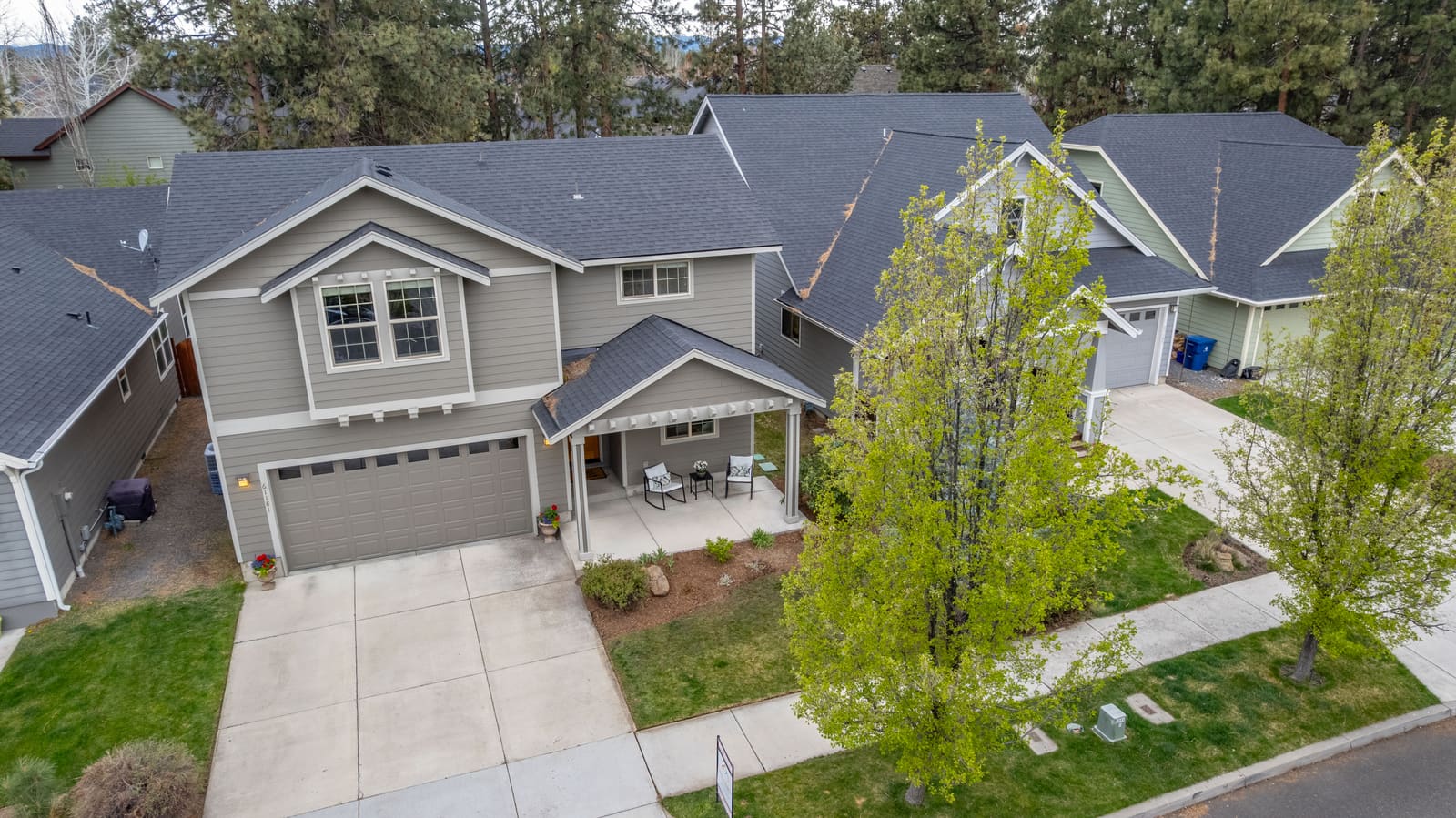
Most move-up buyers budget for one number: the difference between what their current home is worth and what the next one costs. That is not the real cost of moving up. The real cost includes what quadrant you are moving into, what you give up or gain in view and condition, and the transaction costs on both ends that never show up in the daily mental math people do while browsing listings.
I am a real estate agent in Bend, Oregon helping relocation buyers moving to Bend and local move-up sellers and buyers, and the move-up buyer is one of the two groups I work with the most. Here is the honest version of what it actually costs, broken down by the pieces people usually miss.
The Gap Between Homes Is Only Part of the Number
Say your current home is worth $650,000 and you are eyeing something around $900,000. The instinct is to treat $250,000 as the cost of moving up. In practice that number moves in both directions before you ever get to closing.
It moves down because your $650,000 in equity, minus whatever you still owe, becomes your down payment on the new place, so you are not financing the full $900,000. It moves up because you are financing whatever gap is left at today’s rate, and a bigger loan on a bigger home usually means a bigger monthly payment even after your equity is applied. It is worth running your own numbers with a lender before you get attached to a specific house, because the payment jump is usually the thing that changes a buyer’s mind, not the sale price gap itself.
What Quadrant You Move Into Changes the Math More Than Square Footage Does
This is the part most move-up buyers underestimate. In Bend, quadrant and view do more to a price tag than an extra bedroom does.
Right now, $600K to $750K generally buys a real single-family home with a yard in NE or SE Bend, in neighborhoods like Boyd Acres, Mountain View, and the Orchard District on the NE side, or Larkspur, Old Farm District, and Stone Creek on the SE side. Push into the $750K to $900K range and SW Bend starts opening up, where you can actually get a mountain view. That same $750K to $900K in NW Bend, in neighborhoods like NorthWest Crossing, Discovery West, Awbrey Butte, and West Hills, more often buys a fixer-upper than a finished home. A true NW Bend mountain view home generally starts north of $1M.
So a move-up buyer who wants more space and a view has a real decision to make that has nothing to do with the size of the house: which quadrant gets you there for the budget you actually have. I walk through this with almost every move-up client, because the answer is rarely obvious until we look at actual listings side by side. If you are still sorting out which part of town fits your goals and your number, I put together a full breakdown of Bend’s four quadrants that is worth reading before you start touring.
The Transaction Costs on Both Ends
Moving up means selling one home and buying another, and both sides carry their own costs that do not show up when you are just comparing two price tags.
On the sale side: real estate commission, title and escrow fees, prorated property taxes, and whatever prep or repairs your current home needs before it goes on the market. On the buy side: your own closing costs, plus moving expenses, plus in a lot of cases a period where you are paying to store or transport your belongings if the two closings do not line up perfectly.
I cannot hand you a fixed percentage for any of this honestly. It depends on your sale price, your loan payoff, your home’s condition, and how the negotiation goes on both ends. What I can tell you is that move-up buyers who only compare the two sale prices, and skip this part of the math, are consistently surprised by how much smaller the gap in their pocket turns out to be. I walk every move-up client through both sides of that ledger before we tour a single house, so the number in your head matches the number you will actually see at closing.
Selling First, Buying First, and What Each One Costs You
The order you do this in has its own price tag, just not one that shows up on a settlement statement.
If you sell first, you get a clean number to work with and you are not carrying two mortgages. The cost is pressure: you are shopping with a deadline, sometimes from a rental or a short-term stay, and that pressure can push you toward a home that is fine instead of one that is actually right. I have written separately about whether to sell before you buy, including how a rent-back after closing can buy you breathing room without adding a second move.
If you buy first, you avoid that pressure, but you need either enough cash or enough equity access to carry both properties until the first one sells. Some buyers use a bridge loan to make this work, which comes with its own interest cost and fees that need to be weighed against the value of not rushing your sale.
Neither order is universally cheaper. The real cost of each one depends on your equity position, your risk tolerance, and how competitive the price band is that you are buying into at the moment you are ready to move.
A Real Example of Why the Sale Side Matters as Much as the Buy Side
Whatever order you choose, how much cash you carry into your next home depends heavily on how well your current home sells. I listed a home at 20767 NE Angora Ct for $699,900. It drew 5 offers in 5 days and closed at $750,000 in 30 days. That result came from pricing it correctly and preparing it well before it ever hit the market.
For a move-up buyer, that difference is not academic. A home that sells quickly, at or above asking, with minimal back and forth, puts more equity in your pocket to carry into the next purchase. A home that sits and gets picked apart in negotiations does the opposite, and it can shrink your move-up budget by tens of thousands of dollars before you have even started shopping for the new place. If you are on the buying side of a competitive listing yourself, it is worth understanding how to write a winning offer in Bend so you are not the one losing ground on the other end of that equation.
Common Mistakes Move-Up Buyers Make on the Cost Side
The first mistake is budgeting off the price gap between two homes instead of the actual monthly payment difference once your equity and today’s rate are applied. Two homes with a $200,000 gap can produce very different payment jumps depending on how much you are financing.
The second mistake is assuming more square footage automatically means a proportionally higher price. In Bend, quadrant and view often move the number more than bedroom count does, which is why a smaller home with a view can cost more than a larger one without one.
The third mistake is comparing sale price to purchase price and skipping the actual transaction costs on both sides, from commission and title fees on the sale to closing costs on the purchase.
The fourth mistake is picking sell-first or buy-first based on what a friend did instead of what your own equity and risk tolerance actually support.
The fifth mistake is underestimating how much your current home’s sale price affects your move-up budget. A well-prepared, well-priced listing protects more of your equity to carry forward than one that needs multiple price drops before it sells.
What Moving Up Actually Looks Like By Price Band
If you are moving from the $600K to $750K range into $750K to $900K, you are generally trading NE or SE Bend for either a mountain view in SW Bend or more space and updated finishes without a view. That is a real upgrade in daily living, and the payment jump is usually manageable if your current home sells well.
If you are moving from $750K to $900K into the $1M-plus range, you are generally buying into true NW Bend mountain view territory. That is a bigger jump, and it is where I most often see buyers benefit from a longer conversation about financing before they start touring, since the payment difference at that level is substantial even with strong equity behind you.
Not every move-up is about chasing a view or more square footage. Some clients are trading a starter home for a better school situation, a shorter commute, or simply a layout that fits their family now. Whatever is driving it, the same principle holds: know your real number, on both sides of the ledger, before you fall in love with a listing.
Frequently Asked Questions
How much does it cost to move up to a bigger house in Bend, Oregon? It depends on your current home’s equity, the price gap to your target home, and the quadrant you are moving into, since view and location often affect price more than square footage does. Add transaction costs on both the sale and the purchase, which vary by your specific situation and are never a fixed percentage.
What quadrant should I move up into if I want a mountain view? In the $750K to $900K range, SW Bend generally offers the best chance at a real mountain view. The same budget in NW Bend more often buys a fixer-upper. A true NW Bend mountain view home generally starts north of $1M.
Should I sell my current home before I buy my next one? It depends on your equity and your risk tolerance. Selling first gives you a clean number and avoids carrying two mortgages, but puts you on a deadline. Buying first removes that pressure but requires the financial ability to carry both properties temporarily, sometimes with a bridge loan.
Does a bigger house always cost proportionally more in Bend? No. Quadrant, view, and condition often carry more weight than square footage. A smaller home with a view can cost more than a larger home without one.
How do transaction costs affect my move-up budget? On the sale side, expect commission, title and escrow fees, prorated property taxes, and any prep or repairs. On the purchase side, expect your own closing costs and moving expenses. None of these are fixed percentages, and I walk every move-up client through both sides before we tour anything.
Does how well my current home sells affect what I can afford next? Yes, significantly. A home that sells quickly and at or above asking protects more of your equity to carry into the next purchase. A home that sits and gets negotiated down can shrink your move-up budget substantially.
Let’s Run Your Actual Numbers
Every move-up situation is different, and the only honest way to answer what it will cost you is to look at your current home’s real value, your target quadrant, and today’s financing numbers together. If you are thinking about moving up in Bend and want a real conversation about your specific numbers, not a generic estimate, let’s talk. Call or text me at 541-610-5144, email [email protected], or find me at gobendhomes.com.
Kelly Johnson | Go Bend Homes | Bend Oregon Realtor since 2007 | Live Where You Love