
Can I Make a Contingent Offer When Buying a Home in Bend, Oregon?
Wondering if a home-sale contingent offer works in Bend's market? Kelly Johnson explains when sellers accept them, when they won't, and what to do instead if yours gets turned down.
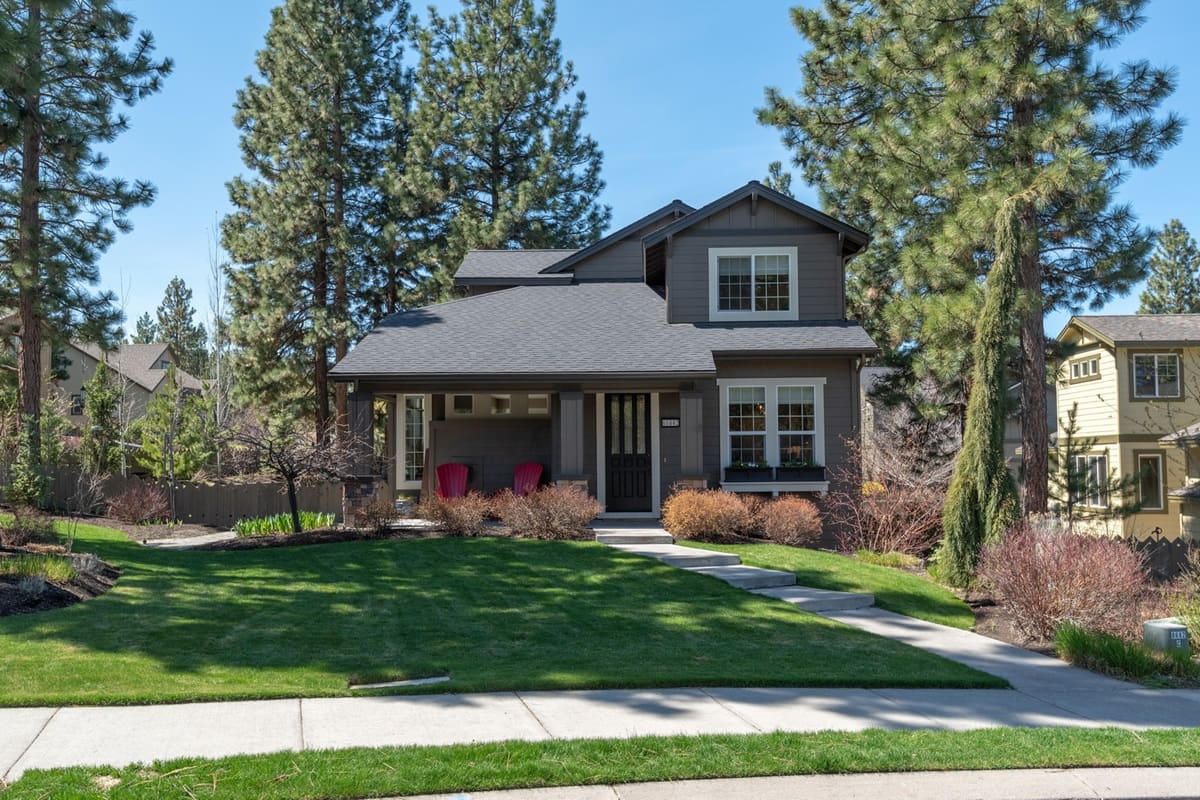
You can write a contingent offer in Bend. Whether a seller accepts it is a different question, and the honest answer is that it depends entirely on how much competition you are up against for that specific house.
I get this question from move-up buyers almost weekly. They own a home already, they have found the next one, and their house has not sold yet. A home-sale contingency lets you write an offer that says your purchase depends on your current home selling first. It protects you from ending up with two mortgages. It also makes your offer weaker in a seller’s eyes, and in Bend, how much weaker depends on where that house sits in the market.
What a Home-Sale Contingency Actually Does
A home-sale contingency is a clause in your purchase agreement that lets you back out, and get your earnest money back, if your current home does not sell by a set deadline. Some versions also include a “kick-out clause,” which lets the seller keep marketing the home and accept a better offer if one comes in, giving you a short window, usually 48 to 72 hours, to remove your contingency or walk away.
For a buyer, it is the safest way to buy and sell at the same time. You are not carrying two mortgages. You are not guessing at what your current home will actually sell for before it is under contract. Your risk is contained.
For a seller, it is the opposite. Every day their home sits under contract with a contingency attached is a day they cannot fully market it to other buyers, and there is no guarantee your house sells at all, let alone on your timeline. In a market with multiple offers on the table, a seller almost never needs to take that risk.
Where This Actually Plays Out in Bend
Bend is not one market. It is several, split by price band and quadrant, and that split decides whether your contingent offer has a real shot.
A well-priced home in NE or SE Bend, in the $600K to $750K range, is the kind of listing that draws five offers in five days. That is not a hypothetical. It is close to what happened on a listing of mine at 20767 NE Angora Ct, which went on the market at $699,900, drew five offers within five days, and closed at $750,000 about a month later. A seller sitting on that kind of demand has zero reason to take a contingent offer over a clean one. Why would they, when the buyer two offers down is pre-approved, has no house to sell, and can close in three weeks?
Move up into the $750K to $900K range and the picture gets more mixed. In SW Bend, that band can buy you a home with real mountain views, and those still move with some competition. In NW Bend at that same price, you are more often looking at a fixer-upper, and those sit longer, price cut more often, and draw fewer offers. A seller with a home that has been on the market three or four weeks without much traffic is a very different negotiating partner than one who just listed on a Thursday and has an open house Saturday.
True NW Bend mountain views, the kind in NorthWest Crossing, Discovery West, Awbrey Butte, and West Hills, generally start north of $1M. At that tier, buyer pools are smaller and deals often take longer to put together anyway, which sometimes leaves more room for a contingency, especially if the seller is also buying their next home and understands the position you are in.
The pattern holds across price points. The hotter the specific listing, the less likely a seller accepts your contingency. The slower it is moving, the more negotiable everything gets, including that.
What Makes a Contingent Offer More Competitive
If you are going to write one, there are ways to make it less scary for the seller to accept.
Get your house on the market first, or at least ready to list. A seller is far more comfortable with a contingency if your current home is already listed, already has a showing schedule, and already has some early interest. “My house isn’t listed yet but I think it’ll sell fast” is a much harder sell than “my house went live yesterday and we already have four showings booked.”
Shorten the timeline. A contingency that expires in 30 days is easier for a seller to live with than one open-ended for 90. Tight timelines show the seller you are serious and limit how long their home sits half-marketed.
Offer a kick-out clause yourself. Proposing it before the seller asks for it signals good faith. It tells them you understand their risk and are willing to let them keep looking while your sale plays out.
Price your own home realistically. If your current home is priced to actually sell in this market, not priced for what you wish it were worth, it will move faster and your contingency becomes less of a gamble for everyone involved.
Bring a strong financial picture otherwise. A large down payment, a healthy pre-approval, and no other contingencies beyond the home sale all make the offer easier to say yes to.
What to Do if Sellers Keep Turning You Down
If you write a couple of contingent offers and lose them both to buyers without a house to sell, it usually means you are shopping in a price band or neighborhood where demand outruns supply. At that point, you have a few real options, not a dead end.
List your home first, then shop with a clean offer. This is the lower-risk path I usually walk move-up clients through. You sell, you know your exact numbers, and your next offer has no financing or sale contingency attached, which makes it dramatically more competitive.
Use a bridge loan or a HELOC on your current equity. Some lenders offer short-term financing that lets you access equity in your current home before it sells, giving you cash for a down payment on the next one without waiting for closing. This is not free money. It costs interest and fees, and you need real equity to qualify. It is worth a conversation with your lender before you assume it is out of reach.
Negotiate a rent-back on your own sale. Once your current home is under contract, you can often ask the buyer for a short rent-back period, staying in the home for a few weeks after closing while you finish moving into the next one. This buys you breathing room without needing your next purchase to be contingent at all.
Widen your search slightly. Sometimes the fix is not a financing strategy, it is looking one price band down or one quadrant over, where a contingency is more likely to be accepted because the seller isn’t fielding five other offers.
A Real Scenario
I worked with a family who owned a home in SE Bend and wanted to move up into NE Bend, closer to their kids’ school. Their equity was solid but not enough to comfortably carry two mortgages if their sale dragged on. We wrote two contingent offers early on and lost both, both times to buyers who had no house to sell. So we changed the order. We listed their SE Bend home first, priced it to move, and had it under contract within two weeks. From there, their offer on the NE Bend home had no contingency attached at all. It was clean, it was fast, and it got accepted on the first try. The two extra weeks it took to sell first ended up saving them the stress of watching two more offers fall through.
Frequently Asked Questions
Do sellers ever accept contingent offers in Bend? Yes, especially on homes that have been sitting for a while or in price bands with less competition. It happens far more on a $850K NW Bend fixer than on a freshly listed $700K home in NE Bend.
Is a home-sale contingency the same as a financing contingency? No. A financing contingency protects you if your loan falls through. A home-sale contingency protects you if your current home does not sell. You can have either, both, or neither, depending on your situation.
What is a kick-out clause? It is a provision that lets the seller keep marketing their home while under contract with your contingent offer, and gives you a short window, often 48 to 72 hours, to remove your contingency and proceed if a better offer shows up.
Should I just sell my house before I even start looking? For a lot of buyers, that is the safer and often the faster overall path, especially in competitive price bands. I walk through both orders and the tradeoffs in detail with every move-up client, since the right answer changes based on your equity, your risk tolerance, and how fast homes are moving in your specific price range right now.
Can a bridge loan replace a contingency entirely? For buyers with significant equity, yes, it can let you write a clean, non-contingent offer while your current home is still on the market. It is not the right fit for everyone, and it is worth running the numbers with your lender before you count on it.
How much does a home-sale contingency actually cost me in negotiating power? It varies by listing. On a home with multiple offers, it can knock you out of contention entirely. On a slower-moving listing, it might cost you very little, or nothing at all, especially if your terms are otherwise strong.
Let’s Figure Out Your Order of Operations
Every move-up situation is different, and the right strategy depends on your equity, your timeline, and exactly how competitive your specific price band and quadrant are right now. I am a real estate agent in Bend, Oregon helping relocation buyers moving to Bend and local move-up sellers and buyers, and this is exactly the kind of planning conversation I have with clients before we write a single offer. If you are trying to figure out whether a contingent offer makes sense for you or whether you should sell first, call or text me at 541-610-5144, email [email protected], or find me at gobendhomes.com. Let’s map out the order that actually fits your numbers.